A historical center full of history
We have curated a bespoke 2-hour Google Maps itinerary, departing from the hotel, to guide you through the highlights of Trapani’s historic heart
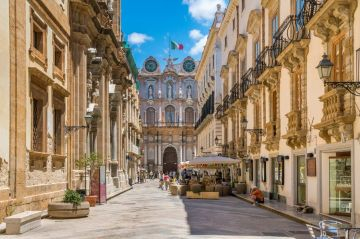
You can easily explore the city’s "living room" on foot through its main streets: Via Garibaldi, Via Torrearsa, and Corso Vittorio Emanuele. This route showcases a succession of historic buildings of high architectural value and numerous churches dominated by sumptuous Baroque features.
Take your time to stroll and, every now and then, look up. You will discover hidden treasures among the friezes, pediments rich in symbolism, and apotropaic masks.
Look up and notice the vents hidden among the stuccoes of the apse and the nave—a primitive example of air conditioning designed to combat the summer heat. Marvel at the magnificent wooden sculptures in the imposing sacristy. Next door lies the cloister, which now houses the Ximenes Lyceum. Continuing on, you will find the Cathedral of San Lorenzo, with its mighty facade;
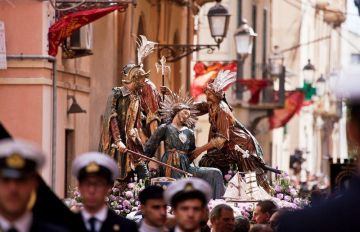
Heading toward the harbor, you will reach the Church of Purgatory, featuring a Baroque facade adorned with statues of saints and pious souls. Inside, it houses 20 sculptural groups dating back to the 1600s. During the world-renowned "Procession of the Mysteries" on Good Friday, these statues are decorated with flowers, candles, silverware, and precious fabrics, then carried on the shoulders of the faithful through the city streets.
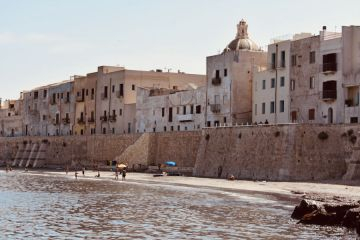
Reach Porta Ossuna and look out over that stunning stretch of sea framed by the Mura di Tramontana. Climb the hidden staircase up onto the walls and soak in that unique sense of freedom and calm—the gliding seagulls, the crystal-clear water stretching beyond the horizon, and the small fishing boats. At sunset, this place becomes truly magical.
Proceed toward the Palazzo di Ghiaccio (Ice Palace), where in ancient times fishermen would stock up on ice to preserve their catch. Then, follow the sea along Viale delle Sirene until you reach Torre di Ligny: the symbol of Trapani! This Saracen-era watchtower was built on the city's westernmost tip, right where the Mediterranean and Tyrrhenian seas meet. Today, the tower houses a small museum and hosts conferences, exhibitions, and various cultural events. Take advantage of it—entry is usually free!
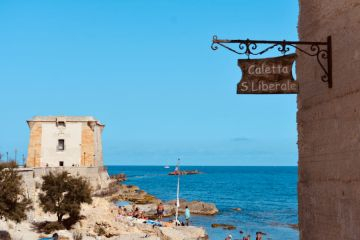
Then, head toward the Fishing Port (Porto Peschereccio). In the early morning, you can witness the arrival of the boats returning after a night of fishing, accompanied by dense flocks of seagulls. Watch the fishermen untangling the nets, where the fish—still shiny and flickering—wiggle about.
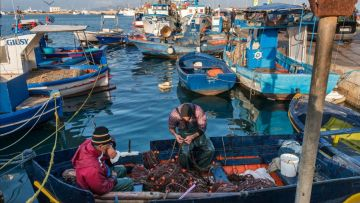
Proceed along the strip of land until you reach Villino Nasi, a small Art Nouveau treasure surrounded by the sea. Stroll through its pathways, adorned with wild and salt-resistant vegetation. Take a moment to rest on the benches, losing yourself in a book or capturing the poetry of nature through a sketch.
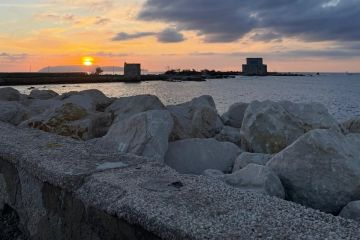
As you exit, right in front of you stands the Lazzaretto, where travelers arriving from long sea voyages were once quarantined before entering the city. Today, it serves as the headquarters of the Lega Navale (Naval League). Observe the rows of sailboats and listen to the rhythmic clinking of the steel riggings in the wind—a sound that feels like a mantra.
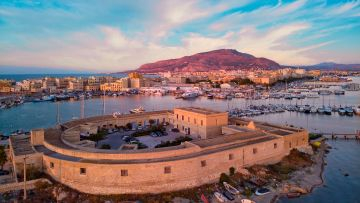
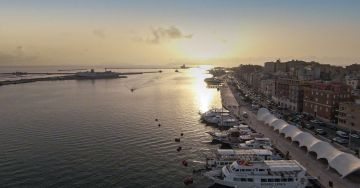
Continuing our walking itinerary, we cross over to the other side of the coast: the Port. This is the departure point for hydrofoils and ferries to the nearby Egadi Islands.
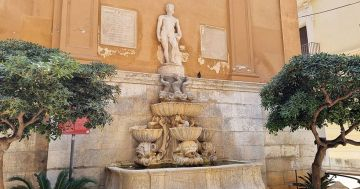
Turn toward the enchanting Piazzetta Saturno, home to the Fountain of Saturn. The statue of the god, leaning against the facade of a private building, towers over the tritons. Originally built in 1342 by the Chiaramonte family, the lords of the city, it was among the first fountains designed to distribute water within the town. Through an arched aqueduct (of which no traces remain), water from the slopes of Mount Erice reached the local homes. In the 18th century, the Baroque fountain was enriched with the statue of Saturn, the mythical founder of Trapani.
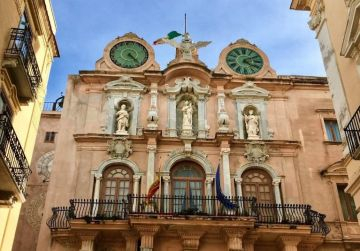
Within the "Loggia"—the name Trapani locals give to the pedestrian area where Via Torrearsa and Corso Vittorio Emanuele intersect—you will find the stunning monumental facade of Palazzo Cavarretta (the City Hall). Adorned with the protective effigies of the Madonna of Trapani, Jesus, and Saint Peter, the city's patron saint, it serves as the main backdrop of the square. Right beneath the "coppo loggia" stands the remaining part of the ancient Clock Tower (or Tower of Porta Oscura), featuring an astronomical clock complete with the zodiac, lunar phases, and meridians.
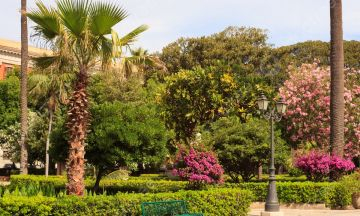
The city’s "green lung" is located just outside the historic center: Villa Margherita. This park spans about 21,000 square meters and has four entrances. Inside, you will find various bird species, parrots, and wood grouses, as well as a small lake with white and black swans, geese, and ducks, along with a children's playground. Every summer since World War II—following the destruction of the Garibaldi Theater—the "Piazzale dei Ficus" hosts the opera performances of the Luglio Musicale Trapanese.